
The socialist muse
EDNO magazine, issue 93, summer 2011
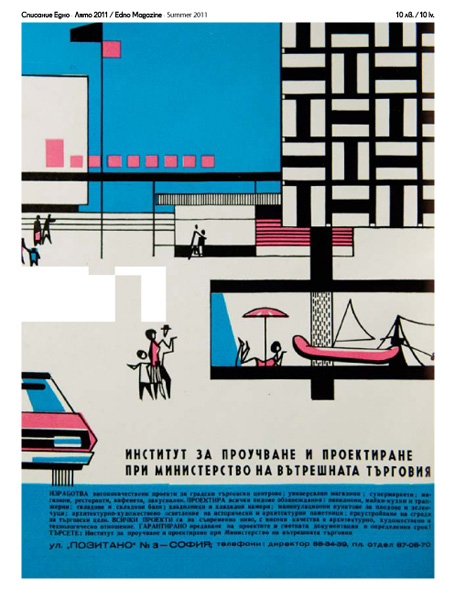
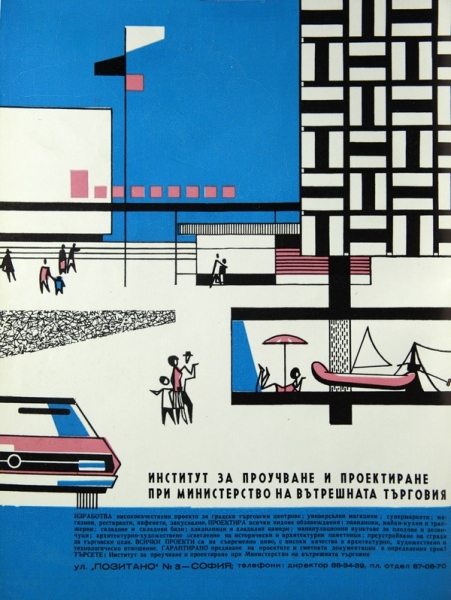
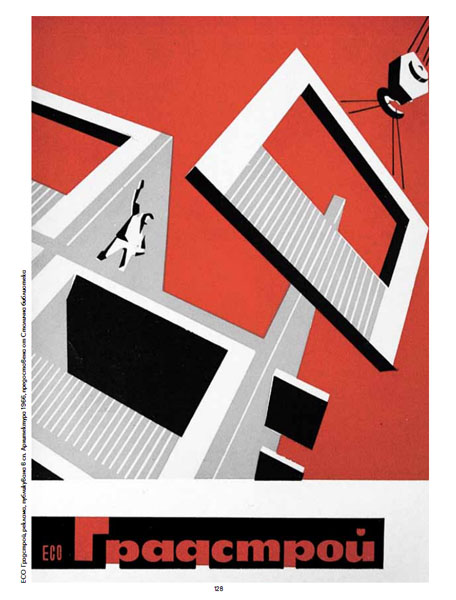
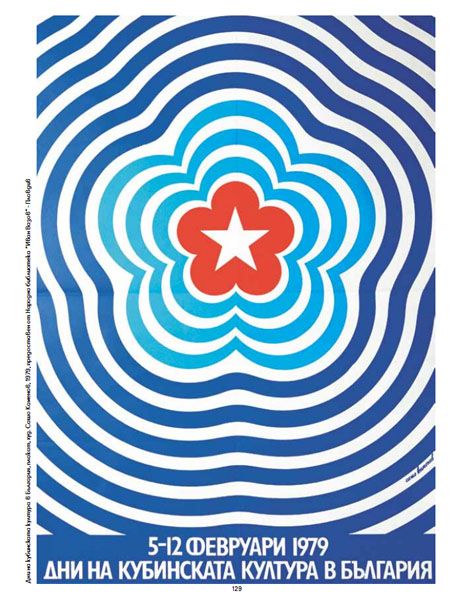
Nikola Mihov, Valeri Gurov and Martin Angelov have been working for almost a year on a project called SOCMUZ – a virtual museum of Bulgarian visual art from the years 1944-1989. The motivation behind it is their desire to preserve and share information about any example of Bulgarian design surviving from those years. Unfortunately, the work of a whole generation of significant artists in the league of Stefan Kanchev falls under the negative label of “communism”.
“The political and cultural will to preserve their works is absent”, the trio told us – but they didn’t stop there, waiting for the state to take the initiative, but rather took some concrete steps to save such works. There are virtually no archives, while the existing ones are not in digital form, they are stored improperly and gaining access to them is difficult – so SOCMUZ has adopted the role of communicator and user-friendly information channel.
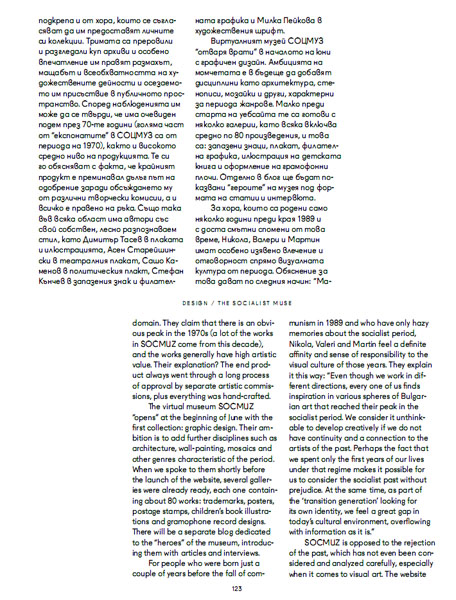
Here is how the project goes: Nikola tracks down photographs and scans the materials; Valeri processes the images, enters the names of the authors and is responsible for the visual identity of the project together with Martin, who maintains the website. All three of them are something like curators, because their personal judgment defines what goes into the “museum collection”.
“Acquisitions” are made through a number of channels. “We came upon friendly and helpful people who believe in our cause, e.g. Boika Angelova from the Sofia Library, Albena Spasova from the Union of Bulgarian Artists, Professor Boyan Filchev from Bulgarian Artist Publishing House. Thanks to them, we collected a lot of our materials.” Nikola, Valeri and Martin have also gained support from people willing to provide them with access to their personal collections. The trio has combed through many archives and they are impressed by the scope, scale and presence of visual arts in the public domain. They claim that there is an obvious peak in the 1970s (a lot of the works in SOCMUZ come from this decade), and the works generally have high artistic value. Their explanation? The end product always went through a long process of approval by separate artistic commissions, plus everything was hand-crafted.
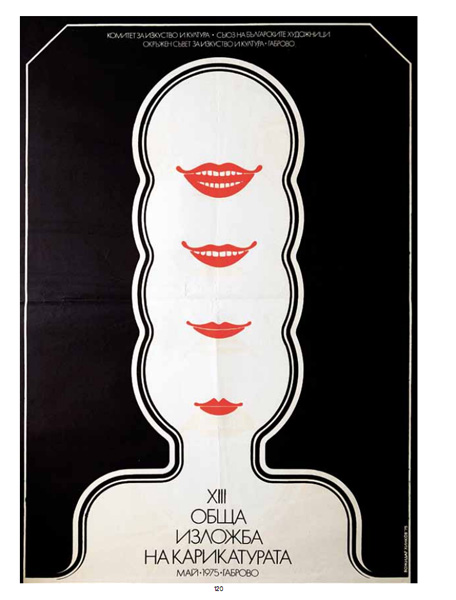
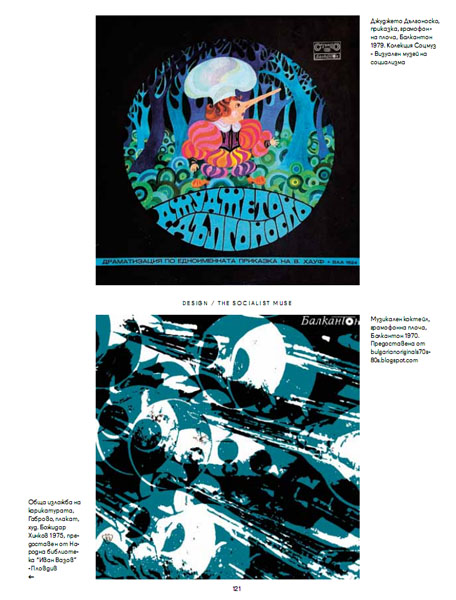
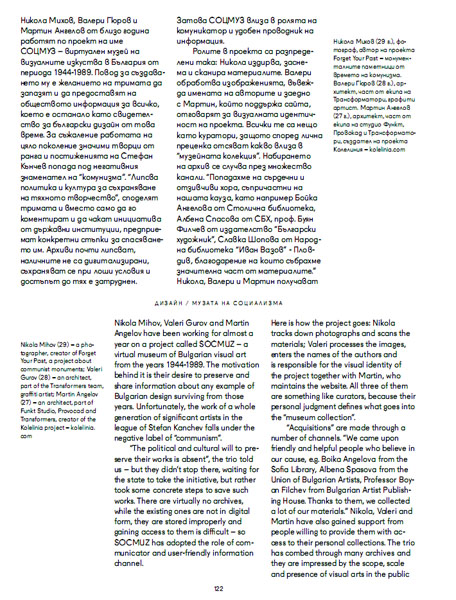
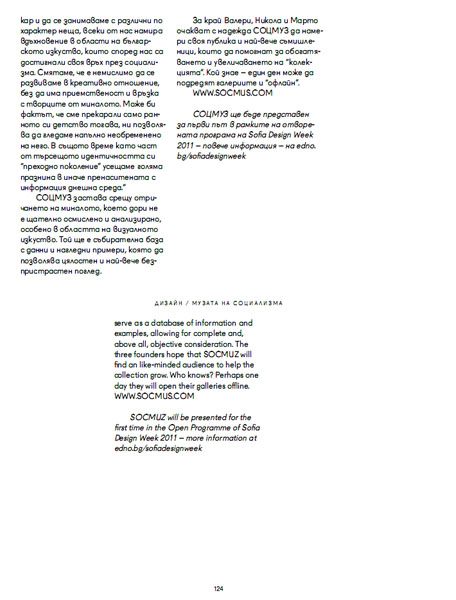
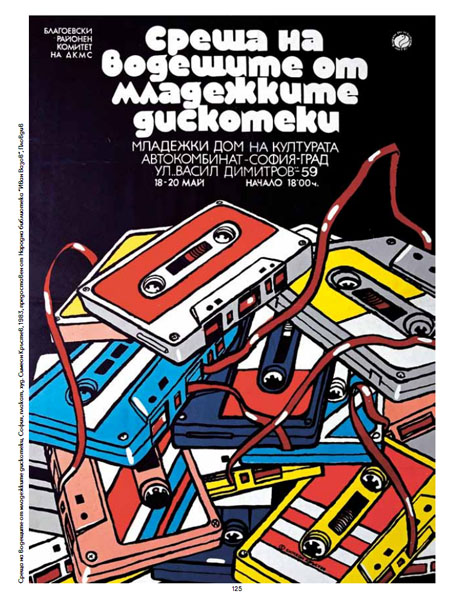
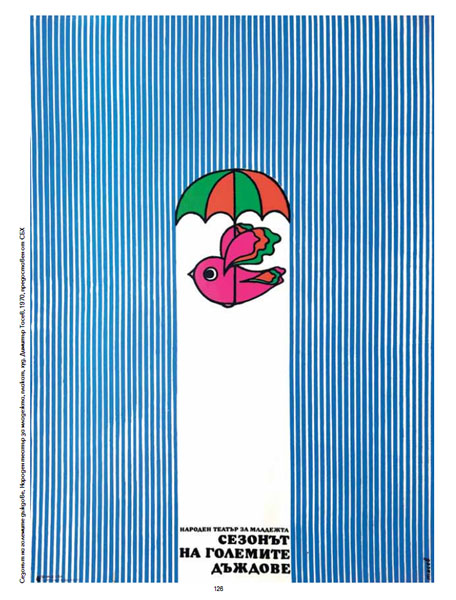
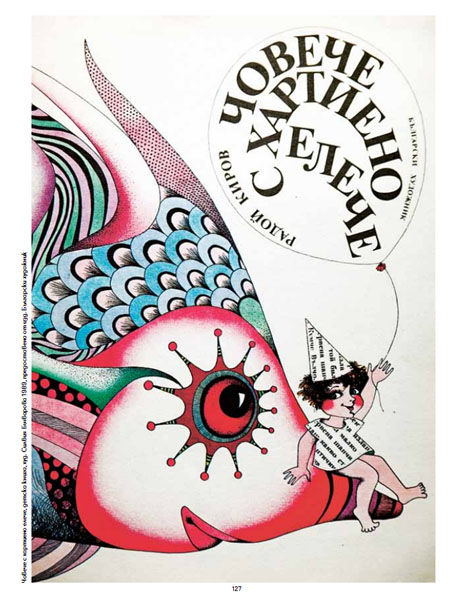
The virtual museum SOCMUZ “opens” at the end of May with the first collection: graphic design. Their ambition is to add further disciplines such as architecture, wall-painting, mosaics and other genres characteristic of the period. When we spoke to them shortly before the launch of the website, several galleries were already ready, each one containing about 80 works: trademarks, posters, postage stamps, children’s book illustrations and gramophone record designs. There will be a separate blog dedicated to the “heroes” of the museum, introducing them with articles and interviews.
For people who were born just a couple of years before the fall of communism in 1989 and who have only hazy memories about the socialist period, Nikola, Valeri and Martin feel a definite affinity and sense of responsibility to the visual culture of those years. They explain it this way: “Even though we work in different directions, every one of us finds inspiration in various spheres of Bulgarian art that reached their peak in the socialist period. We consider it unthinkable to develop creatively if we do not have continuity and a connection to the artists of the past. Perhaps the fact that we spent only the first years of our lives under that regime makes it possible for us to consider the socialist past without prejudice. At the same time, as part of the ‘transition generation’ looking for its own identity, we feel a great gap in today’s cultural environment, overflowing with information as it is.”
SOCMUZ is opposed to the rejection of the past, which has not even been considered and analyzed carefully, especially when it comes to visual art. The website serve as a database of information and examples, allowing for complete and, above all, objective consideration. The three founders hope that SOCMUZ will find an like-minded audience to help the collection grow. Who knows? Perhaps one day they will open their galleries offline.
text by adriana andreeva translation by bogdan rusev